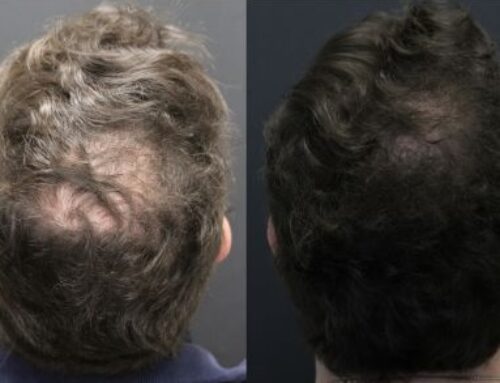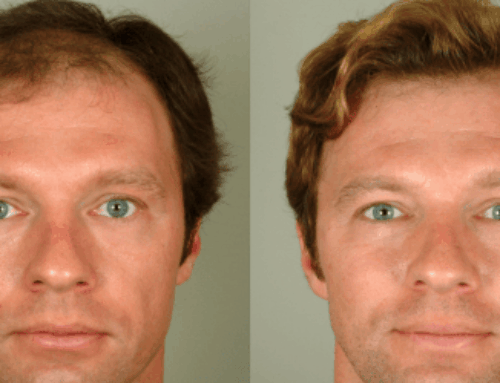
A properly planned hair transplant is designed to be long-lasting, often lifelong, because the grafts come from DHT-resistant donor hair. But how long your results look good depends on two key factors: whether your remaining natural hair continues to thin, and how well you maintain everything with follow-up care. Most people start seeing visible growth around 6-9 months, with the full picture emerging by 12-18 months.
What does “permanent” really mean?
Here’s the deal: transplanted follicles typically keep growing for decades because they keep the same DNA characteristics as the donor area (usually the back of your head), which naturally resists the hormone DHT that causes balding.
The catch? The hair around your new grafts can still thin over time. So while the transplanted hairs themselves may be permanent, your overall look isn’t entirely “set it and forget it.” Most people get the best long-term results when they pair their transplant with ongoing medical treatment to protect their native hair.
When will I see results?
Patience is key here. Most patients start noticing genuine new growth somewhere between 6-9 months post-surgery. The full cosmetic payoff, the “wow, this looks great” moment, usually arrives around 12-18 months, and the crown area tends to fill in last.
One thing that surprises people: those newly transplanted hairs will actually shed within the first 2-8 weeks. This is normal. The follicles are just resetting and will re-enter their growth phase a few months later.
Do FUE and FUT last the same amount of time?
Yes, they do. How long your transplant lasts has much more to do with your individual biology and how well the procedure was planned than which extraction method your surgeon used.
Both FUE (where individual follicles are extracted one by one) and FUT (the “strip” method) are moving the same type of permanent follicles from your donor area. The main differences between the two techniques are about scarring pattern, how many grafts can be harvested in one session, and recovery logistics, not about how long the results will last.
Is there any long-term “fade”?
This is an honest question that deserves an honest answer: yes, there can be some softening over time.
Clinical studies show that graft survival naturally plateaus and can decline modestly over the years. Your hair density might feel slightly lighter as time goes on, even though the transplanted hairs themselves continue their normal growth cycles. Good surgical planning from the start, combined with consistent medical therapy, helps you hold onto that cosmetic density for the long haul.
How do I make results last longer?
Think of your hair transplant as the foundation and medical therapy as the ongoing maintenance plan. Many dermatologists recommend continuing treatments like finasteride or dutasteride (if they’re right for you), minoxidil (topical or oral), and sometimes low-level light therapy.
Here’s a helpful analogy: medications are like the retainer you wear after braces. The surgery creates your new look, but maintenance helps you keep it looking sharp year after year.
What’s the realistic 10-year outlook?
With a stable donor area and consistent maintenance, most people maintain a natural-looking head of hair for a decade or longer.
That said, it’s common for some people to choose a small “top-up” procedure down the line as the hair around their transplant continues to thin with age. The key is designing a hairline and graft distribution from the beginning that will age gracefully, which means conservative placement and smart budgeting of your available donor grafts.
What’s the typical recovery and growth timeline?
- Week 2-8: The Shedding phase (also called “shock loss”) is totally normal and expected
- Months 3-6: New hairs start breaking through the scalp
- Months 6-9: You’ll notice real thickening and volume
- Months 12-18: Full cosmetic result, with the crown often filling in last
Why do hairs shed after surgery?
It’s all about the hair growth cycle. When follicles go through the trauma of being moved, they enter a resting phase called telogen. They shed the existing hair shaft, then restart their active growth phase (anagen) a few months later.
This temporary shock loss can also affect some of your nearby native hairs, especially ones that were already thinning before surgery. It sounds scary when it happens, but it’s a natural biological response.
Are transplants truly “forever” for everyone?
Not in every case. Some conditions, like certain scarring types of hair loss or very aggressive, rapidly progressing alopecia, can make results less predictable.
In these situations, most doctors will want to see your condition stabilized for a couple of years before considering a transplant. That’s why a thorough dermatology evaluation is so important, and sometimes a scalp biopsy is needed to rule out conditions that would make you a poor candidate.
Results Timeline Table
Transplant recovery & growth (typical ranges)
| Milestone | What to expect |
| Days 1-14 | Redness and crusting; protect your grafts carefully; bandages usually come off within days |
| Weeks 2-8 | Shedding of many transplanted hairs, this is normal |
| Months 3-6 | Early regrowth with softer, “baby hair” texture |
| Months 6-9 | Noticeable volume increase |
| Months 12-18 | Full cosmetic result, especially in the crown |
Our tip for hair transplant (and why it works)
Here’s advice you might not expect: wait, even if you can afford the procedure right now.
If your hair loss is still actively evolving (which is super common if you’re in your 20s), invest 6-12 months in medical therapy first. You’ll save precious donor grafts, end up with a more age-proof hairline design, and significantly reduce your risk of permanent shock loss to your existing hair. Dermatology experts consistently recommend stabilizing hair loss before surgery, and there’s solid reasoning behind it.

Meet Robert Haber, MD, FISHRS
Dr. Haber is considered one of the finest hair transplant surgeons in the world, and lectures internationally each year. He also directs the region’s busiest private clinical trials unit studying new medications.
In 2023, Dr. Haber was the recipient of the prestigious Manfred Lucas Lifetime Achievement Award by the ISHRS, for his exceptional contributions and commitment to the field of hair transplantation. Only 15 other surgeons globally have ever received this honor.
The International Society of Hair Restoration Surgery (ISHRS) awarded Dr. Haber the coveted Golden Follicle Award in 2009 as one of the world’s top hair transplant surgeons, in recognition of his academic contributions and surgical skills.