If you’ve been diagnosed with basal cell carcinoma or squamous cell carcinoma, there’s a good chance your doctor has mentioned Mohs surgery as the standard treatment path. And while Mohs is effective, it involves cutting, stitches, scarring, and a recovery period that not every patient wants or is suited for.
Image-guided superficial radiation therapy, known as IG-SRT, offers a non-surgical alternative that treats the same cancers without any incision. No cutting, no bleeding, no anesthesia, and no scar. For many patients, it produces equally strong results with a dramatically better treatment experience.
This guide explains exactly what IG-SRT is, how it works, who it’s right for, and what to expect if you pursue it as a treatment option.
What Is IG-SRT?
IG-SRT stands for Image-Guided Superficial Radiation Therapy. It is a non-surgical, non-invasive treatment for non-melanoma skin cancers, specifically basal cell carcinoma (BCC) and squamous cell carcinoma (SCC). It works by delivering low-energy X-rays directly to the cancer cells in the skin, disrupting their DNA and preventing them from dividing and growing. Over the course of a full treatment schedule, the tumor shrinks and is eliminated entirely.
What sets IG-SRT apart from older radiation treatments is the imaging technology built into the process. Before any radiation is delivered, and throughout every session of the treatment course, high-resolution dermal ultrasound is used to map the exact size, shape, and depth of the tumor in real time. This allows the treatment team to target the cancer with precision and adapt the dose as the tumor responds, something that simply was not possible with earlier forms of superficial radiation therapy, which were delivered without any imaging at all.
The radiation used is low-energy and shallow. It penetrates only the outer layers of the skin and does not reach deeper tissue, organs, or structures. It is not the same as the high-dose radiation used to treat internal cancers like breast or prostate cancer. A useful comparison is the X-rays used at a dentist’s office: that is roughly the energy level involved.
IG-SRT is performed in a dermatologist’s office. It does not require a hospital, an operating room, or a surgical team. The equipment is FDA-cleared, the treatment is supported by published clinical research, and it has been recommended by the American Academy of Dermatology as a treatment option for appropriate non-melanoma skin cancer patients.
What Does IG-SRT Stand For?
Each word in the acronym describes a specific feature of how the treatment works.
Image-Guided means that high-resolution ultrasound imaging is used before and during every treatment session. Rather than estimating the size and depth of a tumor from the surface, the treatment team can see exactly what they are targeting beneath the skin. This imaging data drives every decision about where to direct the radiation and how much to deliver. It also allows the team to watch the tumor shrink session by session, providing visible confirmation that the treatment is working.
Superficial refers to how deep the radiation goes. It is designed to reach only the upper layers of the skin where non-melanoma skin cancers form and grow. It does not penetrate further into the body, which is why it has minimal systemic effects and why the side effects remain localised to the treated area.
Radiation Therapy refers to the use of X-ray energy to damage and ultimately destroy cancer cells. Cancer cells divide rapidly, and radiation disrupts the DNA inside them in a way that prevents that division. Over repeated treatment sessions, those cells lose the ability to survive, and the tumor is eliminated.
Together, the name describes a treatment that uses real-time imaging to precisely guide targeted, low-depth radiation at skin cancer tumors.
Which Skin Cancers Does IG-SRT Treat?
IG-SRT is specifically designed for non-melanoma skin cancers. The two types it treats are basal cell carcinoma and squamous cell carcinoma, which together account for the vast majority of all skin cancer diagnoses in the United States.
Basal cell carcinoma
Basal cell carcinoma is the most common form of skin cancer. It develops in the basal cells that line the deepest layer of the outer skin, and it most commonly appears on areas that receive frequent sun exposure, particularly the face, nose, ears, scalp, and neck. BCC grows slowly and rarely spreads to other parts of the body, but it can cause significant local damage and disfigurement if left untreated, particularly on the face, where it often develops.
Squamous cell carcinoma
Squamous cell carcinoma is the second most common skin cancer. Like BCC, it typically develops on sun-damaged skin and is most common on the face, ears, lips, and hands. SCC has a somewhat higher risk of spreading than BCC if not treated promptly, which makes early and effective treatment especially important.
Both of these cancers are common, both are treatable, and both can be addressed with IG-SRT in appropriate cases. Your dermatologist will determine whether your specific cancer is a good candidate based on its size, depth, subtype, and location.
It is important to note that IG-SRT is not used for melanoma, which is a different and more aggressive form of skin cancer that requires a different treatment approach entirely.
How Does IG-SRT Compare to Mohs Surgery?
Mohs micrographic surgery is currently considered the standard of care for many basal cell and squamous cell carcinomas, and it has a strong track record. But it is still surgery, with everything that entails: cutting, anesthesia, wound management, scarring, and recovery time. IG-SRT is a meaningful alternative for patients who are eligible. Here is how the two approaches differ in practice.
Mohs surgery involves removing the cancerous tissue in thin layers, examining each layer under a microscope, and continuing until clear margins are confirmed. It is highly precise in its ability to preserve healthy tissue, but it does create a surgical wound. Depending on the size and location of the cancer, that wound can be significant, and the resulting scar can be permanent and visible. The procedure requires local anesthesia, and patients typically need wound care and a period of activity restriction during healing.
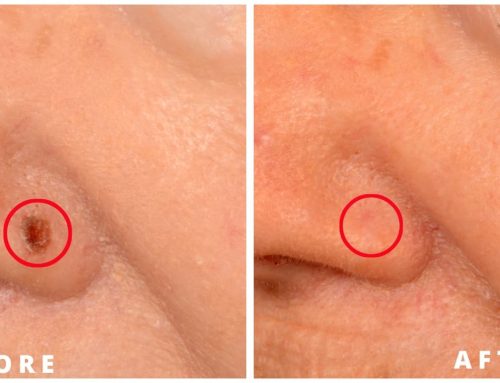
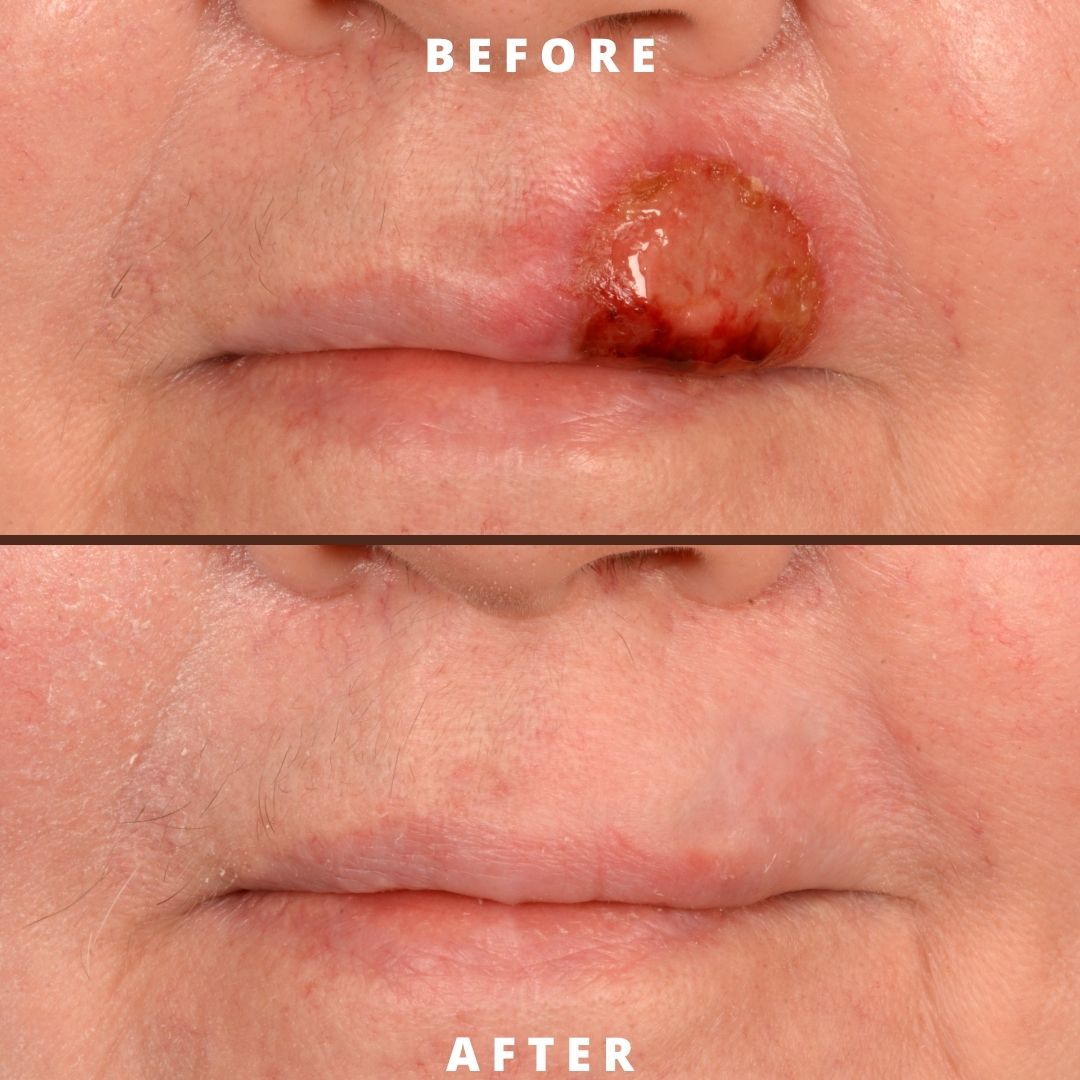
IG-SRT requires none of that. There is no cutting, no anesthesia, no wound, and no recovery period. The treatment is delivered externally through the skin’s surface. Because there is no incision, there is no scar. For cancers located on visible areas of the face, including the nose, eyelids, ears, lips, and cheeks, this is often the most compelling argument for IG-SRT: patients can treat their cancer without a lasting visible reminder of it. IG-SRT works well for recurrent skin cancer and is better than Mohs for areas where precise tissue sparing is critical.
| Mohs surgery | IG-SRT | |
|---|---|---|
| Procedure type | Surgical | Non-surgical |
| Incision | Yes | No |
| Anesthesia | Local | None |
| Scarring | Possible | None |
| Sessions | 1 visit | ~20 sessions |
| Recovery | Required | None |
| Cure rate | ~99%+ | ~99%+ |
| Treats melanoma | Yes | No |
The cure rate for IG-SRT in appropriate early-stage cases is reported at 99.6%, which is comparable to surgical outcomes for the same cancer types and stages.
The right choice between the two approaches depends on the individual patient’s cancer characteristics, overall health, and personal priorities. Both are legitimate options, and both deserve consideration before a treatment decision is made.
What Does IG-SRT Treatment Feel Like?
One of the most consistent things patients report about IG-SRT is how different it feels from what they expected. Most people arrive with anxiety about radiation, and most leave their first session surprised by how uneventful it was.
Treatment is performed in the dermatology office by a trained radiation therapist. Each session begins with a brief ultrasound scan of the affected area. This scan is painless and takes only a few minutes. It produces a detailed image of the tumor that the treatment team uses to configure the radiation settings for that session, including the precise depth and dose.
Once the settings are confirmed, the radiation applicator is placed against the skin over the tumor and the treatment is delivered. Most patients feel nothing during this part of the session. There is no heat, no vibration, no pressure, and no pain. The radiation is not something you can see or feel.
The session itself is brief, typically lasting only a few minutes once the imaging is complete. Afterward, you can leave the office immediately and return to your normal activities. There is no wound to care for, no restrictions on what you can do, and no recovery period.
A full course of IG-SRT usually involves around 20 sessions, delivered two to four times per week over several weeks. The gradual, fractionated approach is intentional. Spreading the treatment out over time allows the radiation to work cumulatively on the cancer while giving the surrounding healthy skin time to recover between sessions. Throughout the course, the ultrasound imaging continues to monitor the tumor, and the treatment plan can be adjusted based on how the cancer is responding.
Who Is a Good Candidate for IG-SRT?
IG-SRT is appropriate for many, but not all, patients with basal cell or squamous cell carcinoma. The following factors tend to make someone a strong candidate.
Patients with early-stage cancers classified as Tis, T1, or T2 are the primary candidates. These are cancers that are still localised to the skin and have not spread to lymph nodes or other areas of the body.
People with cancers in visible or cosmetically sensitive locations often benefit most. The face, nose, eyelids, ears, lips, scalp, and forehead are all areas where surgical scarring is particularly noticeable and consequential. IG-SRT treats these cancers without leaving any incision marks.
Cancers in areas that are technically difficult to operate on surgically are also well suited to this approach. The ears, scalp, hands, feet, and shins can all present complications for surgery due to thin skin, limited tissue available for reconstruction, or difficulty in post-surgical healing. IG-SRT avoids all of those challenges.
Patients who are not good surgical candidates for medical reasons, such as older adults, those taking anticoagulant medications, or people with conditions that impair wound healing, can often receive IG-SRT safely since it carries none of the procedural risks associated with cutting, bleeding, or infection at a surgical site.
People with a strong preference to avoid surgery, needles, or general anesthesia are also well served by this approach, given that the treatment involves none of those things.
IG-SRT is generally not recommended for melanoma, for cancers that have grown deeply into tissue beyond the skin, or for those that have spread beyond the original site. A dermatologist will review your biopsy results, the stage and subtype of your cancer, and your overall health before recommending whether IG-SRT is appropriate.
What Are the Side Effects of IG-SRT?
IG-SRT is well tolerated by most patients. Because the radiation stays within the skin and does not penetrate deeper, there are no systemic side effects. You will not experience nausea, full-body fatigue, or hair loss across your body, which are the side effects people most commonly associate with cancer treatment.
The side effects that do occur are limited to the treated area of skin. The most commonly reported include redness and mild irritation, similar in appearance to a sunburn, which typically develops during the treatment course and resolves within a few weeks after the final session. Some patients notice that the treated skin becomes temporarily thinner or more sensitive.
Changes in skin pigmentation are possible. The treated area may become slightly lighter or darker than the surrounding skin. In most cases, this is subtle and fades over time, though for some patients, a degree of pigmentation change may be lasting. This is worth discussing with your doctor in advance, so you have clear expectations.
Hair loss will occur within the treatment field if the area being treated has hair. This is confined entirely to that zone and does not affect hair elsewhere.
In a smaller number of patients, the surface of the skin in the treated area may temporarily break down during the later stages of treatment. This is a known and manageable side effect that your doctor will monitor and advise on. It typically heals within two to six weeks after treatment ends.
Talk to a Dermatologist About Whether IG-SRT Is Right for You
If you’ve been diagnosed with basal cell or squamous cell carcinoma, it’s worth discussing all of your options before committing to a treatment plan. IG-SRT offers an effective, non-surgical path that many patients prefer, particularly those concerned about scarring, surgical risk, or recovery time.
At Haber Dermatology, Dr. Robert Haber offers image-guided superficial radiation therapy for appropriate skin cancer patients at our Beachwood, Ohio, office. To find out whether you’re a candidate, call us at 216-932-5200 or visit haberderm.com to book a consultation.
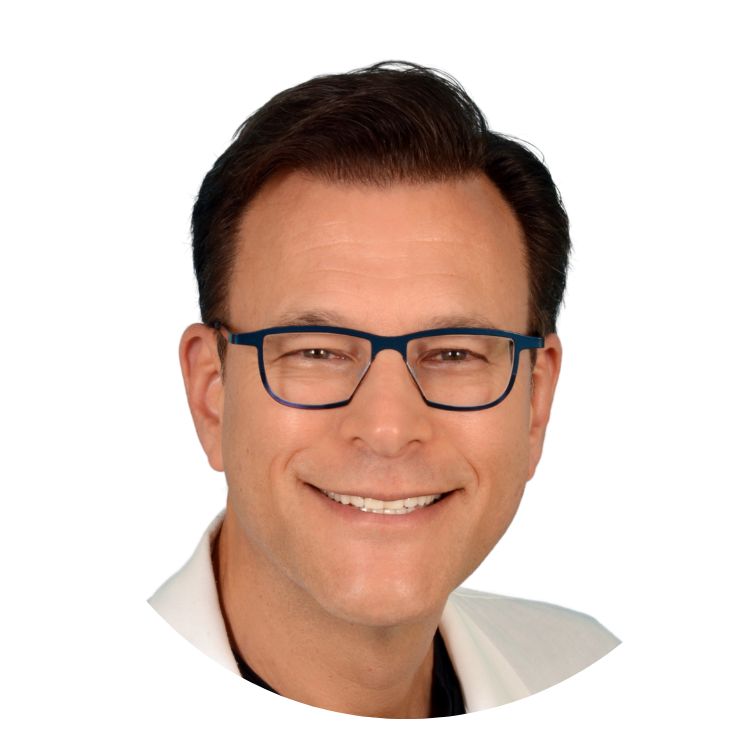
Meet Robert Haber, MD, FISHRS
Dr. Haber is considered one of the finest hair transplant surgeons in the world, and lectures internationally each year. He also directs the region’s busiest private clinical trials unit studying new medications.
In 2023, Dr. Haber was the recipient of the prestigious Manfred Lucas Lifetime Achievement Award by the ISHRS, for his exceptional contributions and commitment to the field of hair transplantation. Only 15 other surgeons globally have ever received this honor.
The International Society of Hair Restoration Surgery (ISHRS) awarded Dr. Haber the coveted Golden Follicle Award in 2009 as one of the world’s top hair transplant surgeons, in recognition of his academic contributions and surgical skills.