Summary
Skin cancer is highly treatable when caught early, and treatment isn’t one-size-fits-all. It depends on the cancer type, location, and stage, which is why a board certified dermatologist should guide the decision.
A skin cancer diagnosis, or even a suspicious lesion, puts most people in research mode fast. This guide walks through your options so you can have an informed conversation with your dermatologist.
Treatment options have expanded. For many eligible patients, IG-SRT now offers a non-invasive first option, alongside surgery, topical therapy, immunotherapy, and targeted drugs depending on type and stage.
What Types of Skin Cancer Affect Which Treatments Are Used?
The type of skin cancer a patient has is the single most important factor in determining which treatments are appropriate. Not every therapy works on every cancer, and some approaches are well-suited to one type while being largely irrelevant for another.
The three most common forms are basal cell carcinoma (BCC), squamous cell carcinoma (SCC), and melanoma. Each behaves differently. BCC rarely spreads beyond the original site but can be locally destructive if left untreated. SCC carries a higher risk of spreading to nearby tissue or lymph nodes. Melanoma is the most aggressive of the three and requires the most rigorous staging and treatment planning.
How Does Skin Cancer Type Change the Treatment Approach?
Treatment selection shifts significantly across the three types. The table below outlines the typical first-line approaches and alternatives for each.
| Cancer Type | Preferred Treatment | Alternative Approaches | Key Consideration |
| Basal Cell Carcinoma (BCC) | IG-SRT (image-guided superficial radiation therapy) for eligible tumors | Mohs surgery or excisional surgery (reserved for complex, recurrent, or high-risk anatomic sites), curettage and electrodesiccation, topical therapy (imiquimod, 5-FU) | Rarely metastasizes; a non-invasive option preserves tissue and avoids surgical scarring where eligible |
| Squamous Cell Carcinoma (SCC) | IG-SRT for eligible, well differentiated or early-stage tumors |
Mohs or excisional surgery (for high-risk, deeply invasive, or recurrent cases), curettage and electrodesiccation, systemic therapy for advanced cases | Risk of nodal spread is higher for certain subtypes; radiation eligibility depends on depth and margins |
| Melanoma | Wide local excision remains standard | Sentinel lymph node biopsy, immunotherapy, targeted therapy, radiation (adjuvant) | IG-SRT is not currently used for melanoma; staging determines whether systemic treatment is needed |
What Are the Most Common Skin Cancer Treatments?
Surgery remains the most widely used approach across all three major skin cancer types. The goal of any surgical technique is to remove the cancerous tissue completely while preserving as much healthy surrounding skin as possible. Several distinct procedures fall under this category, and the right choice depends on the tumor’s size, location, depth, and the patient’s individual circumstances. However,
Image Guided Superficial Radiation Therapy (IG-SRT) is rapidly becoming the preferred approach for many BCC and SCC tumors as it avoids surgery altogether and offers the highest cure rate of any treatment.
Image-Guided Superficial Radiation Therapy (IG-SRT)
Image-guided superficial radiation therapy is a newer, non-surgical approach to treating non-melanoma skin cancers, primarily BCC and SCC, as an alternative to Mohs surgery. It combines real-time ultrasound imaging with superficial radiation delivery, allowing the treating physician to visualize the tumor’s depth and dimensions before and during each treatment session.
The imaging component is what sets IG-SRT apart from conventional superficial radiation. Rather than estimating tumor depth, the physician can confirm that the radiation is being calibrated to the actual lesion. Because superficial radiation penetrates only a few millimeters into the skin, the dose is concentrated at the tumor while minimizing exposure to the deeper tissue beneath it.
IG-SRT is delivered in a series of outpatient sessions. There is no incision, no anesthesia, and no wound care after each visit. Patients go home the same day and can resume normal activities. This makes it a particularly relevant option for patients who are not good surgical candidates due to age, health status, or medications like blood thinners, and for those who want to avoid a surgical scar in a visible location.
It is best suited for BCC and SCC and is not used for melanoma. As with any radiation-based approach, candidacy depends on the tumor’s type, location, and characteristics, which your dermatologist will evaluate during a consultation.
Mohs Surgery
Mohs micrographic surgery is used considered the gold standard for removing skin cancers in cosmetically sensitive or functionally critical areas, such as the face, ears, nose, and eyelids. The procedure involves removing the tumor layer by layer and examining each layer under a microscope in real time before removing the next. This continues until no cancer cells remain.
The primary advantage is tissue conservation. Because every layer is checked before more is removed, Mohs preserves the maximum amount of healthy surrounding skin. It also offers a high cure rate for BCC and SCC, particularly in cases where the tumor has recurred or sits in a high-risk location.
However, the removal of the cancer creates a surgical wound that must be closed, and this usually requires additional cutting, skin flaps, or skin grafts that when healed leave visible and often unsightly scars.
Excisional Surgery
Standard excisional surgery removes the tumor along with a margin of surrounding healthy tissue. It is appropriate for many BCCs and SCCs that are not in high-risk anatomical locations, and it is also the standard approach for melanoma, where wider margins are required based on the tumor’s depth.
The difference between Mohs and excision comes down to margin assessment. With standard excision, the pathology analysis happens after the procedure, meaning a second surgery is occasionally needed if margins come back positive. Mohs eliminates that uncertainty by checking margins intraoperatively.
Electrodesiccation and Curettage
Electrodesiccation and Curettage (ED&C) is a straightforward, office-based procedure used for small, well-defined, low-risk skin cancers. The tumor is physically scraped away using a curette, then the base is treated with an electric current to destroy remaining cells and control bleeding. This cycle is typically repeated two to three times during a single visit.
It is most commonly used for superficial or nodular BCC and certain low-risk SCCs on the trunk and extremities. The procedure is quick and heals without sutures, though it does leave a flat scar. It is not appropriate for tumors near the eyes, nose, or mouth, or for aggressive cancer subtypes.
Traditional Radiation Therapy
Traditional radiation therapy is a legitimate treatment option for skin cancer, though it is not the first choice in most cases. This is NOT the same treatment as IG-SRT discussed above. It tends to be used when surgery is not practical, such as when a tumor is located in an area where removing it surgically would cause significant functional impairment, or when a patient’s health makes surgery inadvisable.
Radiation is also used as an adjuvant therapy after surgery for high-risk SCC, particularly when there is perineural invasion or lymph node involvement. For certain elderly patients with BCC, radiation can be an effective alternative to surgery, though treatment typically requires multiple sessions over several weeks.
How Do Doctors Decide Which Skin Cancer Treatment Is Right for You?
Treatment decisions in dermatology are rarely made in isolation from a single data point. A dermatologist evaluates multiple factors simultaneously, and the final recommendation reflects how those variables interact for that specific patient.
What Role Does Staging Play in Choosing a Treatment?
Staging determines how far a cancer has advanced, and it directly governs which treatment categories are on the table. For melanoma, staging is particularly consequential: a thin melanoma confined to the outer layers of skin is treated very differently from one that has reached the lymph nodes or spread to distant organs. Staging for BCC and SCC is generally not necessary and is only performed for selected high-risk tumors.
High-risk features that can upgrade a tumor’s stage or shift the treatment approach include tumor thickness, the involvement of nerves (perineural invasion), aggressive histologic subtypes, and evidence of lymphovascular spread. These findings on pathology reports should always be discussed with a dermatologist who can explain what they mean for the next steps.
Does Skin Cancer Location on the Body Affect Treatment?
Yes, and location is one of the strongest reasons to consider the treatments. Skin cancers on the face, particularly near the eyes, nose, lips, and ears, are considered high-risk partly because of their location. Because IG-SRT doesn’t require cutting into tissue or removing surgical margins, it avoids the technical difficulty and cosmetic or functional risk that come with operating in these tight, sensitive areas, which is exactly where surgical approaches run into the most trouble.
Mohs surgery was developed to manage those margin challenges when surgery is the chosen path, and it still has a role for tumors that aren’t eligible for radiation: deeply invasive cases, certain recurrent tumors, or cases where tissue diagnosis beyond what imaging shows is needed.
Tumors on the trunk and extremities generally allow for wider excision margins with less cosmetic concern, giving surgeons more flexibility in cases where surgery remains the better option. Location also intersects with drainage patterns: SCC on the ear, for example, carries a different lymph node risk than the same tumor on the shoulder, a factor that matters for staging regardless of which treatment path is chosen.
Ready to Talk Through Your Skin Cancer Treatment Options?
At Haber Dermatology, board-certified dermatologist Dr. Haber brings decades of clinical experience to every consultation, treating patients of all ages from his Beachwood, Ohio office. Dr. Haber holds faculty appointments in the Departments of Dermatology and Pediatrics at Case Western Reserve University School of Medicine and has lectured internationally on dermatologic care. When you come in with questions about a diagnosis, a suspicious lesion, or a treatment plan that was proposed elsewhere, you get a thorough, unhurried review from a physician who understands the full scope of what your options actually are.
Whether you are at the beginning of this process or looking for a second perspective on a recommendation you have already received, we welcome the conversation. Book a consultation with our team and take the next step.
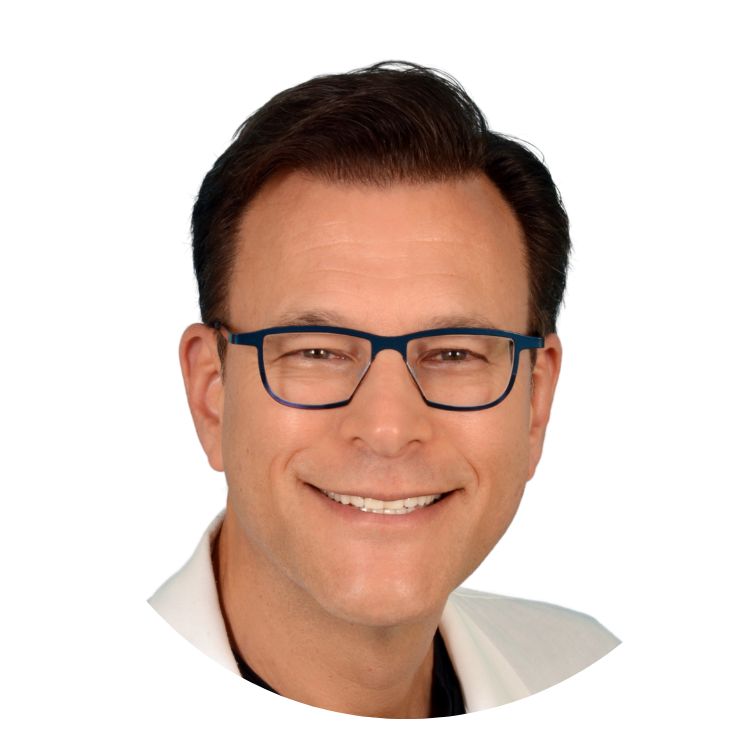
Meet Robert Haber, MD, FISHRS
Dr. Haber is considered one of the finest hair transplant surgeons in the world, and lectures internationally each year. He also directs the region’s busiest private clinical trials unit studying new medications.
In 2023, Dr. Haber was the recipient of the prestigious Manfred Lucas Lifetime Achievement Award by the ISHRS, for his exceptional contributions and commitment to the field of hair transplantation. Only 15 other surgeons globally have ever received this honor.
The International Society of Hair Restoration Surgery (ISHRS) awarded Dr. Haber the coveted Golden Follicle Award in 2009 as one of the world’s top hair transplant surgeons, in recognition of his academic contributions and surgical skills.